مقتل 68 شخصًا على الأقل في حادث قطار فائق السرعة في إسبانيا، ورئيس الوزراء يقول إن “البلاد بأكملها حزينة”

Headline:
Workers face terror at crash site as Spaniards begin to ask tough questions
Timestamp:
Published 21:46 GMT 28 October
Visible Timestamp:
21:46 GMT 28 October
Byline:
Sarah Rainsford Eastern and Southern Europe correspondent, reporting from the crash site
Body:
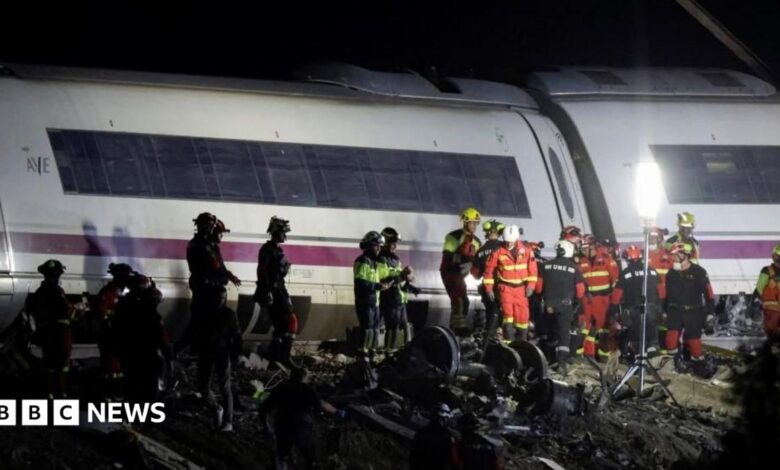
More than 12 hours after the two trains collided here near Urda, and long after dark, the massive rescue operation is still in full swing.
Strong lights are at the scene, illuminating several train carriages that are leaning precariously on their sides on the tracks.
I can see some wreckage from other carriages, spilling onto the bridge. Among all of these are emergency workers, who are facing the horrors of Europe’s worst rail disaster in many years.
A drone occasionally takes off to scan the scene, casting bright beams below, and there’s a constant sound of thudding and metallic crashes as giant cranes and cutters go to work on the wreckage, perhaps searching for more victims.
At one point, a hearse passed us on the road.
While families with missing relatives wait, and forensic teams in Toledo work to identify the dozens of people killed here, Spaniards across the country are asking tough questions about how this disaster happened.
We are ending our live coverage here, but you can read more in the news story.