Here’s the translation of the text and an explanation of the context:
Translation:
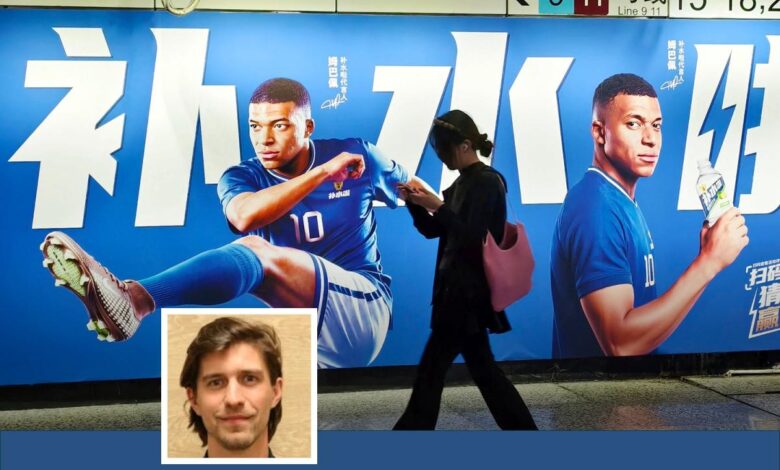
“Lucas Aubin, Research Director at IRIS and author of ‘Sport War, A New Geopolitics’ (Tallandier Editions), explains why Kylian Mbappé’s video, initially innocuous, could have such consequences in China.”
Explanation of the Context (Why it caused consequences in China):
The text refers to a controversy involving Kylian Mbappé and China that occurred around 2022-2023. While the specific details of the video are not provided in this snippet, the general reason why “initially innocuous” actions by foreign celebrities can cause “such consequences” in China usually revolves around the following:
-
Sensitivity to National Sovereignty (especially Taiwan): The most likely reason for controversy involving Kylian Mbappé and Nike (his sponsor) was a perceived slight related to China’s territorial integrity, particularly concerning Taiwan.
- The Incident: Mbappé had promoted Nike shoes (specifically the Nike Zoom GT Cut 2) in a video. The controversy arose because the shoe prominently featured an old Nike logo on its tongue. This old logo, which included stylized letters that somewhat resembled the character “人” (rén, meaning “person” or “people”), was interpreted by some Chinese nationalists as looking similar to a symbol associated with the Taiwanese independence movement (specifically, the “人” character used in certain pro-independence flags or imagery).
- Chinese Stance: China views Taiwan as an inseparable part of its territory and considers any perceived support for Taiwanese independence, even symbolic or accidental, as a severe violation of its sovereignty and a direct insult.
-
Online Nationalism and “Woke” Culture in Reverse: Chinese social media platforms are highly vigilant. Nationalistic users (often dubbed “little pinks”) actively monitor foreign celebrities, brands, and companies for any perceived anti-China statements, symbols, or actions. If something is deemed offensive, it can quickly escalate into a trending topic, leading to calls for boycotts and official condemnation.
-
Strict Content Scrutiny: The Chinese government exercises strict control over media and online content. Once a controversy gains traction, platforms and media outlets are often pressured to remove content, block access, or censor discussions related to the offending party.
-
Brand Accountability: Foreign brands operating in China are expected to align with Chinese political sensitivities. Nike, having faced previous controversies in China (e.g., over Xinjiang cotton), is under intense scrutiny. A celebrity promoting their product, if involved in a perceived political misstep, can quickly drag the brand into trouble.
In essence, an action that might seem utterly harmless or insignificant in a Western context (like an old shoe logo) can be interpreted through a highly sensitive political lens in China, leading to significant backlash for the celebrity and their associated brands. Lucas Aubin, as an expert in sports geopolitics, would explain how these cultural and political sensitivities intersect with global sports and celebrity culture, turning seemingly minor issues into major diplomatic or commercial incidents.