This article reports on a new decree issued by the eastern-based Libyan government.
Summary:
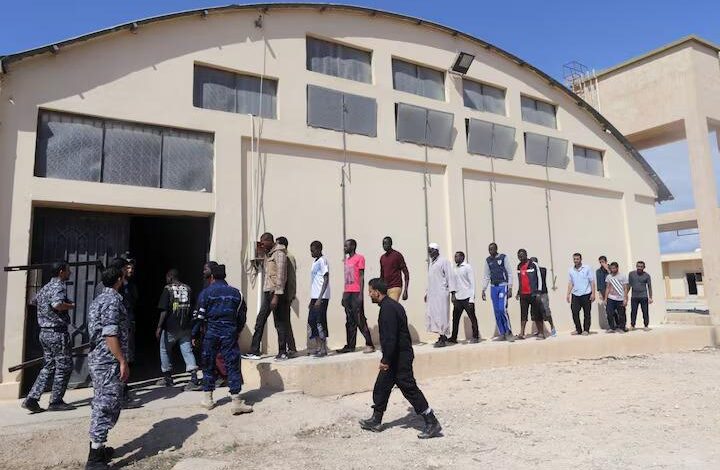
The eastern Libyan government, led by Osama Hammad and based in Benghazi, announced late Wednesday a ban on the entry of Iranian and Afghan citizens into Libya through all land, sea, and air ports. The government did not provide specific reasons for this decision. The Ministry of Interior is tasked with implementing the ban and ensuring the deportation of Iranian and Afghan nationals currently in Libya without valid residency permits.
The decree includes exceptions for members of diplomatic and consular missions accredited to Libya and their families, as well as professionals working in education, the medical sector, and allied medical professions, provided they have official approvals and necessary work contracts.
This decision follows similar restrictions imposed by the eastern government in June, which banned citizens from Sudan, Eritrea, Ethiopia, and Somalia, citing a need to regulate the entry of foreign nationals. The article highlights Libya’s ongoing political division between the eastern government (allied with military commander Khalifa Haftar) and the internationally recognized government of Abdul Hamid Dbeibah, based in Tripoli. It also notes Libya’s role as a major transit point for migrants seeking to reach Europe, with over 900,000 migrants hosted in the country as of June, according to UN data.
Multiple Choice Questions:
-
What was the primary announcement made by the eastern Libyan government?
A. The establishment of new trade agreements with Iran and Afghanistan.
B. The lifting of all travel restrictions for foreign nationals.
C. The banning of Iranian and Afghan citizens from entering Libya.
D. A new policy to encourage tourism from all countries. -
Which of the following groups is exempt from the entry ban, according to the article?
A. All students pursuing higher education in Libya.
B. Business investors with existing contracts in Libya.
C. Members of diplomatic and consular missions.
D. Tourists seeking short-term visas for cultural visits. -
Besides Iranians and Afghans, which other nationalities were previously banned by the eastern Libyan government in June?
A. Syrian and Yemeni.
B. Egyptian and Jordanian.
C. Sudanese, Eritrean, Ethiopian, and Somalian.
D. Moroccan and Algerian. -
What is the main political situation in Libya described in the article?
A. A unified government preparing for national elections.
B. A political division between two rival governments.
C. A country undergoing rapid economic expansion and stability.
D. A state of complete international isolation without diplomatic ties.